
Explore Ecology and Conservation
Fostering a love of learning and connecting you to resources that help make a difference.

Dedicated to the conservation of the natural world, HerbSpeak is an evolving hub of resources, stories, and materials curated to foster curiosity, while providing meaningful and actionable information. From habitats and ecological relationships to conservation stories and templates, there is always something to discover.
Most Popular
See what’s trending and explore the most popular projects currently on site.
Get Notified
Get new resources, articles, and materials directly to your inbox.
Regional Campaigns
Browse region-specific campaigns to learn more about local ecosystems.
How-To Guides
Learn how to perform surveys, take field notes, and much more for free.
Who Is HerbSpeak For?
HerbSpeak is for two types of people.
It is for you, if you want to connect with nature and rekindle your sense of curiosity. You don’t need the vocabulary (you’ll get there) and you don’t need the understanding (you’ll get there, too.)
HerbSpeak is also for you, if you are in (or entering) conservation in any capacity. Whether you are going to school, volunteering, getting paid for it, or somewhere in-between.
It’s common for these two to overlap.
Both individuals are what HerbSpeak calls a Naturalist.
Depending on which category you fall into most right now, you will find different things useful here. Keep reading to find your way through the website. Keep scrolling to find what you’re interested in.

Image: Pieris virginiensis (Vulnerable) The West Viriginia White
Most Recent Publication:
“Am I a Naturalist?”
To be a naturalist, the barrier to entry is simply to be a student of nature, either formally or informally. Modern technology has a lot to offer for our health and comfort, but there is something that can’t replace the feeling of sitting outside in the breeze, watching two squirrels play around a tree, or watching as a butterfly probes the flowers that just bloomed the day before.
You can be someone who cares deeply. Someone who notices. Someone who performs science, or someone who creates art. You can be interested in history, in research, or in conservation. In birds, or insects, or plants, or the climate – or how they all fit together.
Whatever your interest is within an ecosystem, you are a Naturalist. The human connection to nature does not look the same for everyone.
Knowledge is Powerful
Knowledge is a large part of how you relate to the world. Experiences can shape your reality, and your understanding can shape your experiences. By taking control of your ability to learn, you allow yourself to look at the world in a different light.
Learning also expands your vocabulary and ability to express yourself. If you stop learning, you stop discovering new ways to express feelings, ideas, and insights.
With this understanding, it’s important to note that knowledge is not a destination. There is no true end. It is all about the process and about staying open to change and new possibilities. Learning keeps you curious, and changes how you relate to (and interact with) the world around you on a much deeper level.

Above: image from Why Do Leaves Change Color in the Fall?
Would you like to take a deep breath and look at a forest and say: “Pretty. It’s so green!”
Or, would you like to look at that same forest and say, “Pretty. A scrub-oak pine barren! I bet there are some interesting birds there. Maybe some Ruffed Grouse past that ridge. Since it’s late Spring, I wonder if the Bayberry flowers are blooming.” Take a breath (because you are hiking, and hills are tough to climb if you don’t breathe.)“I wonder if I’ll see anything I don’t know yet. That would be exciting.”
You can still appreciate the color green in the latter example, but one of these attitudes are much more engaged in the details, in discovery, and with curiosity. Suddenly, the world is full of individuals and communities, not just a wall of nameless foliage and animals.
Conservation Resources
While many of these resources focus on plants either as a sole topic or entry point, it is important to acknowledge that nothing exists in isolation; the ecosystem has many interactions and relationships, and plants are just one piece of that puzzle.
But, that can make things overwhelming. You are invited to explore the resources and topics that you are most interested in, or find most useful – and skip the ones you are not.
There is no claim for this to be a comprehensive resource, nor could it ever be. It is, however, an effort to create a better resource than what we have.
For the Beginner
The Roadmap to Nature page is for the beginning Naturalist, who is starting their journey but does not yet have an active involvement in conservation. These pieces are curated to be bite-sized educational pieces.
You don’t have to start at the deep end, and you don’t have to wade through anything you aren’t interested in. Chase your curiosity and see where you end up.
There is everything from resources on the basics of plant anatomy, to where to go to learn about nature local to you, or how to use identification apps. If you want to get involved in conservation, there are some ideas as well, depending on what suits your abilities.
For the Professional
If you are a more experienced Naturalist as a professional, student, or advocate who is actively involved in conservation, the type of content you are looking for may be different than what the above can provide you. This is where the Conservation Resources page holds the most potential.
Keep in mind that you can further your individual knowledge, or you can work towards furthering a collective knowledge. These differences are not officially distinguished, but there is a need for these acts to become more intentional. In working to un-do the silo’ing of many resources across conservation, you can find things like how to use an ID key, free downloads of field data plotting sheets, or places to apply for funding.
KEW Plants of the World Database
Plants of the World is an incredible global resource of plant taxonomic data, imagery, and information. It is one of the best referential databases for plant species globally, developed by the Royal Botanic Gardens, Kew.
iNaturalist App
iNaturalist is a US-based, 501(c)3 nonprofit organization. The tool is largely considered to be a social network-based resource that uses technology to “share biodiversity information to help each other learn about nature.”
How to Use iNaturalist
We hear the stories about how naturalists used to spend their time discovering new species by foraging in dense jungles and sailing the seas looking under crude microscopes like they did in the time of Charles Darwin. Technology evolves, and today, there are a lot...
Psst! Looking for something to read? Check out the Library.

The Language of Science: Understanding Binomial Nomenclature
Since the beginning of written history, people have tried to categorize things, organizing the web of life into a wide range of classifications to better understand the world. This was the beginning of taxonomy, or the science of naming things.

Can I Grow Ginseng at Home?
Ginseng used to be plentiful in the United States and southern Canada, but the ‘gold rush’ of ginseng in the colonial era left the population on the decline. Today, we can change the trend and help steward in a new generation of plants. There’s nothing more rewarding than seeing ginseng pop out of the ground year after year in a thriving ecosystem.

How to Use iNaturalist
The naturalists of today may not spend most of their time sailing the seas and looking under crude...

How Do Carnivorous Plants Digest Insects?
Carnivorous plants are fascinating, getting their nutrients from insects rather than the soil like other plants. It might leave you wondering just how the plants digest their insect prey – learn more in this article.

Is Mandrake the Same as Ginseng?
Is Mandrake the Same as Ginseng? No, mandrake is not close to ginseng either in composition or...

Is Panax the Same as Ginseng?
Is Panax Ginseng the Same as Ginseng? Yes, Panax ginseng is commonly referred to as Ginseng, and...

What Climate Does Ginseng Grow In?
When you are cultivating a new crop of ginseng, it’s important to do your research not only on how...

Nasami Farm: Native Plant Nursery Spotlight
Tucked neatly at the base of the Berkshire mountains of western Massachusetts, Nasami Farm is a...

Guide to Using Go Botany
This article has been updated. See these resources instead:There are many plant identification...
About HerbSpeak
HerbSpeak first came online in April of 2015. Preceding that, the energy was directed towards authoring articles in informal formats, and before that, it has existed as a vague idea while searching for resources.
Every three years or so, HerbSpeak is re-structured and fine-tuned towards its next evolution. In these iterative improvements, the focus narrows, the aspirations grow, and it matures more completely into what it was always meant to be.
Authored by Destynnie K. Berard (D.K. Berard), who has a decade of experience working in marketing and communications, and working in conservation since 2021. Destynnie has a varied skillset and strives to put it to use for the greater collaboration of conservationists. This is a project of curiosity and passion, but also forged from a motivation and deep desire to make a difference. Learn more about HerbSpeak here.
This is a love letter to the world.
It is for the spiders tucked into their webs under mossy rocks, the trees that host caterpillars and birds and beetles, and the rolling clouds that relieve elephants of the heat during their migrations.
To the fox after a successful hunt, to the rabbit that narrowly escapes. To the plant that feeds that rabbit but seeks pollination from the beetle who cleans the forest floor. To the microbes that keep the soil healthy for the plant and feed the atmosphere for clean rain.
You and I are here to keep the balance. Let’s be good stewards.

Since
2015
Highlights
Highlights are charismatic species, relationships, or topics that have gotten specific attention on HerbSpeak throughout the years, and new articles or other publications are likely to appear in the future.
Ginseng
Ginseng (Panax spp.) is a particular plant of interest for its charisma, historical significance, and peculiar shape. Panax quinquefolius is the primary plant in focus, and while it is genetically distinct from its twin, Panax ginseng, it is related enough to be considered a disjunct species.
Today, the plant is vulnerable and critically imperiled across its range. Little is known about how many individuals remain on the landscape, and fields that were once rife with ginseng communities are now at risk of extinction through poaching and habitat fragmentation. As a cultural pasttime that brought communities together, it is now up to the very people who once foraged for it in search of wealth to keep this plant on the landscape for future generations.
Beech Leaf Disease (BLD)
Beech Leaf Disease is a research project studying the relationship between a recently discovered nematode subspecies (Litylenchus crenatae spp. mccanni) and Beech trees (Fagus spp.). This relationship research began as an effort to determine the nematodes’ method of travel throughout North America, which seems to be primarily via wind and bird migration.
Without effective treatment methods to inhibit the nematodes’ population, combined with the negative effect they have on the trees point to an unfortunate reality: beeches throughout southeastern Canada and Northeastern America are at risk of extinction. How do we bounce back, supporting specialist species that depended on beech trees as a source of shelter or food?
Consider Supporting
If you like HerbSpeak, please consider supporting. There are multiple ways you can do this, including volunteering if you are an experienced professional or have a skillset that could help create a new resource.
If you don’t have the financial means, you can lend your support by reading material, commenting on articles, sharing resources with other people, and telling people about HerbSpeak. If you’re so inclined, you can even link to HerbSpeak on your social media. Your readership is so important!
If would like to support monetarily, you can donate any amount that you feel comfortable with. As a one-person project, everything you see here comes out of the energy, time, and pocketbook of a passionate individual. You can donate via PayPal or Venmo on this page.

The Benefits of Microgreens
You might be surprised that microgreens come packed with benefits. In this article, learn about the top 5 common benefits of eating and growing microgreens.

How to Propagate Pothos
Pothos is a great beginner plant and it is easy to propagate, but many people overlook how difficult first-time propagations can be. Find the right answers and the most efficient way to propagate your houseplant in this in-depth guide.

How Avocados Thrived When They Should Have Gone Extinct
Did you know that humans are one of the only animals that can eat avocado? We are the reason this fruit is still around. Learn the history of the avocado here.

What Are Microgreens?
Learn everything you need to know about the nutritional baby plants known as microgreens and why they’re taking the food industry by storm in recent years.

(Top 20) Plants Safe for Cats and Dogs
Keeping houseplants is a hobby that is on the rise in recent years. The more time you spend at home, the more you want to fill your home with beautiful foliage. In fact, plants are great at helping reduce the stress we experience on a daily basis. But what do you do if you also have pets?

Why Plants Develop Variegation
Variegation in plants is highly sought after in the horticultural and houseplant community. These plants, with unusual colors in splotches across the leaves, are considered unique and often find their way into the houseplant community. But what causes variegation, and why do plants develop it in the first place?

Climate Change: A Discussion and Action Plan
Let’s pretend the latest James Bond villain had a How To guide to climate change. This villain wants nothing more than to see the world burn – in a figurative, but also very literal sense – so how would he do it?
In this article, HerbSpeak author D.K. Hall addresses the importance of climate action, several recent and significant climate events, why you should care about it, and why it is happening at such a rapid pace.

The Lewd Origin of the Venus Flytrap’s Name
You might be surprised to learn that the Venus Flytrap does not have such an innocent name as many people have been led to believe in recent years. In this article, HerbSpeak dives into the sheepishly dirty and downright lewd origin of the Venus Flytrap’s name.

How to Choose the Best Hummingbird Feeder
Spring and summer are right around the corner, and for many of us that bring an exciting, migratory flurry of color and energy known as hummingbirds. Choosing the best hummingbird feeder can be the difference between attracting entire families of hummingbirds to your yard and attracting one or two.
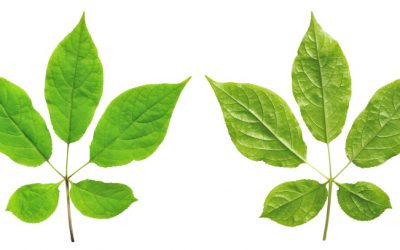
Ginseng Look-Alikes
In this guide, you will learn how to identify the different ginseng lookalikes in the native habitat of your crop, allowing you to avoid painful rashes and crop loss when pulling unwanted plants from your wild simulated patch.