
Explore Ecology and Conservation
Fostering a love of learning and connecting you to resources that help make a difference.

Dedicated to the conservation of the natural world, HerbSpeak is an evolving hub of resources, stories, and materials curated to foster curiosity, while providing meaningful and actionable information. From habitats and ecological relationships to conservation stories and templates, there is always something to discover.
Most Popular
See what’s trending and explore the most popular projects currently on site.
Get Notified
Get new resources, articles, and materials directly to your inbox.
Regional Campaigns
Browse region-specific campaigns to learn more about local ecosystems.
How-To Guides
Learn how to perform surveys, take field notes, and much more for free.
Who Is HerbSpeak For?
HerbSpeak is for two types of people.
It is for you, if you want to connect with nature and rekindle your sense of curiosity. You don’t need the vocabulary (you’ll get there) and you don’t need the understanding (you’ll get there, too.)
HerbSpeak is also for you, if you are in (or entering) conservation in any capacity. Whether you are going to school, volunteering, getting paid for it, or somewhere in-between.
It’s common for these two to overlap.
Both individuals are what HerbSpeak calls a Naturalist.
Depending on which category you fall into most right now, you will find different things useful here. Keep reading to find your way through the website. Keep scrolling to find what you’re interested in.

Image: Pieris virginiensis (Vulnerable) The West Viriginia White
Most Recent Publication:
“Am I a Naturalist?”
To be a naturalist, the barrier to entry is simply to be a student of nature, either formally or informally. Modern technology has a lot to offer for our health and comfort, but there is something that can’t replace the feeling of sitting outside in the breeze, watching two squirrels play around a tree, or watching as a butterfly probes the flowers that just bloomed the day before.
You can be someone who cares deeply. Someone who notices. Someone who performs science, or someone who creates art. You can be interested in history, in research, or in conservation. In birds, or insects, or plants, or the climate – or how they all fit together.
Whatever your interest is within an ecosystem, you are a Naturalist. The human connection to nature does not look the same for everyone.
Knowledge is Powerful
Knowledge is a large part of how you relate to the world. Experiences can shape your reality, and your understanding can shape your experiences. By taking control of your ability to learn, you allow yourself to look at the world in a different light.
Learning also expands your vocabulary and ability to express yourself. If you stop learning, you stop discovering new ways to express feelings, ideas, and insights.
With this understanding, it’s important to note that knowledge is not a destination. There is no true end. It is all about the process and about staying open to change and new possibilities. Learning keeps you curious, and changes how you relate to (and interact with) the world around you on a much deeper level.

Above: image from Why Do Leaves Change Color in the Fall?
Would you like to take a deep breath and look at a forest and say: “Pretty. It’s so green!”
Or, would you like to look at that same forest and say, “Pretty. A scrub-oak pine barren! I bet there are some interesting birds there. Maybe some Ruffed Grouse past that ridge. Since it’s late Spring, I wonder if the Bayberry flowers are blooming.” Take a breath (because you are hiking, and hills are tough to climb if you don’t breathe.)“I wonder if I’ll see anything I don’t know yet. That would be exciting.”
You can still appreciate the color green in the latter example, but one of these attitudes are much more engaged in the details, in discovery, and with curiosity. Suddenly, the world is full of individuals and communities, not just a wall of nameless foliage and animals.
Conservation Resources
While many of these resources focus on plants either as a sole topic or entry point, it is important to acknowledge that nothing exists in isolation; the ecosystem has many interactions and relationships, and plants are just one piece of that puzzle.
But, that can make things overwhelming. You are invited to explore the resources and topics that you are most interested in, or find most useful – and skip the ones you are not.
There is no claim for this to be a comprehensive resource, nor could it ever be. It is, however, an effort to create a better resource than what we have.
For the Beginner
The Roadmap to Nature page is for the beginning Naturalist, who is starting their journey but does not yet have an active involvement in conservation. These pieces are curated to be bite-sized educational pieces.
You don’t have to start at the deep end, and you don’t have to wade through anything you aren’t interested in. Chase your curiosity and see where you end up.
There is everything from resources on the basics of plant anatomy, to where to go to learn about nature local to you, or how to use identification apps. If you want to get involved in conservation, there are some ideas as well, depending on what suits your abilities.
For the Professional
If you are a more experienced Naturalist as a professional, student, or advocate who is actively involved in conservation, the type of content you are looking for may be different than what the above can provide you. This is where the Conservation Resources page holds the most potential.
Keep in mind that you can further your individual knowledge, or you can work towards furthering a collective knowledge. These differences are not officially distinguished, but there is a need for these acts to become more intentional. In working to un-do the silo’ing of many resources across conservation, you can find things like how to use an ID key, free downloads of field data plotting sheets, or places to apply for funding.
KEW Plants of the World Database
Plants of the World is an incredible global resource of plant taxonomic data, imagery, and information. It is one of the best referential databases for plant species globally, developed by the Royal Botanic Gardens, Kew.
iNaturalist App
iNaturalist is a US-based, 501(c)3 nonprofit organization. The tool is largely considered to be a social network-based resource that uses technology to “share biodiversity information to help each other learn about nature.”
How to Use iNaturalist
We hear the stories about how naturalists used to spend their time discovering new species by foraging in dense jungles and sailing the seas looking under crude microscopes like they did in the time of Charles Darwin. Technology evolves, and today, there are a lot...
Psst! Looking for something to read? Check out the Library.
Springtime Sighting of a Vulnerable Butterfly, the West Virginia White
One spring morning, eight botanists packed into carpools and drove to a small town on the far edge of western Massachusetts to find a small white butterfly, Pieris virginensis, and its host plant, Cardamine concatenata and C. diphylla.

Packaging Microgreens: The Ultimate Guide
People who buy microgreens want to improve their diets in a sustainable way. If your packaging is the wrong shape, size, or material, you’ll struggle to turn a profit, let alone stay open for business. By the time you’re done reading, you’ll understand the importance of great packaging and the best options for every scenario.

Are Microgreens Still Profitable?
Interested in getting into the microgreens market, but worried if they’ve lost their popularity and profitability? Learn what you need to know here.

Choosing the Right Microgreen Rack for Any Setup
Eating microgreens is a great way to add variety and nutrition to your diet. But these days,...
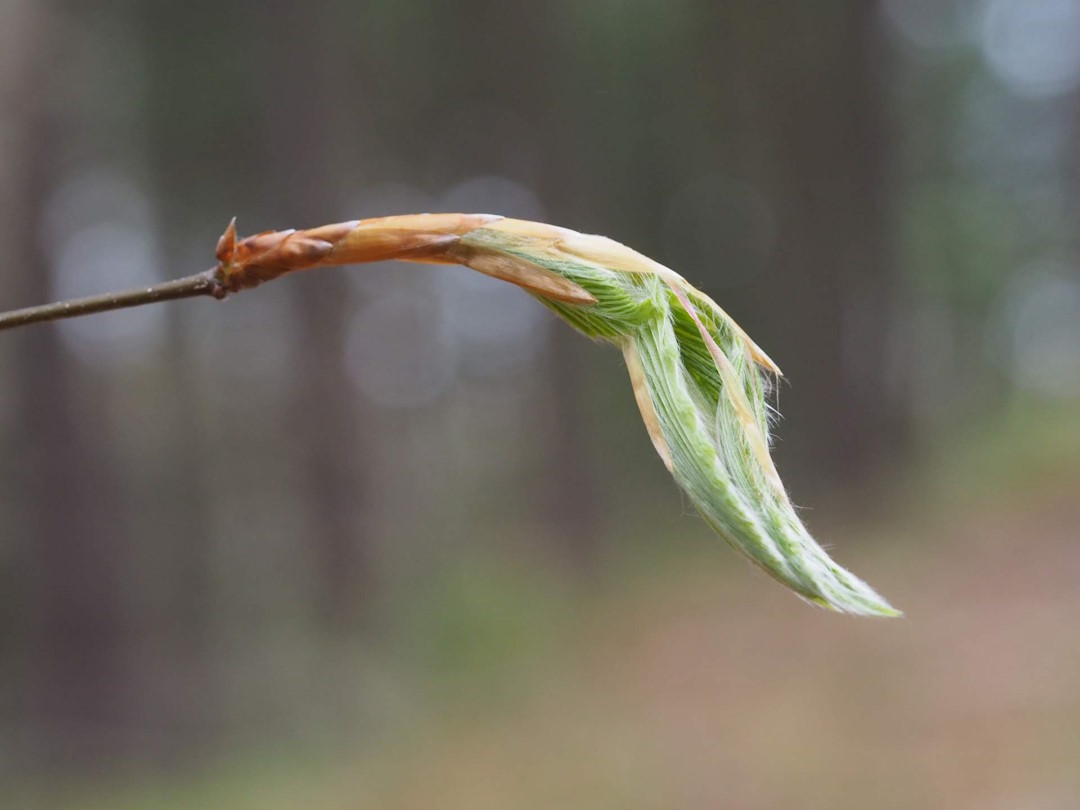
Call for Beech Leaf & Soil Samples
Update 3/01/24 No longer accepting samples. Instead, please report images of both infected AND...

Citizen Reports Needed: The Nematode Project
Today, I’m coming forward with the announcement of an independent study that will be publicized on this blog for the foreseeable future.

What Is Native Plant Trust?
Native Plant Trust is becoming a household name in New England, making a positive impact on the...

Why is Picking Ginseng Illegal?
American ginseng is an unassuming plant native to the deciduous forests of the United States. This...

Why Native Plants Are Important
Over the last few years, a lot of people have begun turning to alternate methods of gardening. One...
About HerbSpeak
HerbSpeak first came online in April of 2015. Preceding that, the energy was directed towards authoring articles in informal formats, and before that, it has existed as a vague idea while searching for resources.
Every three years or so, HerbSpeak is re-structured and fine-tuned towards its next evolution. In these iterative improvements, the focus narrows, the aspirations grow, and it matures more completely into what it was always meant to be.
Authored by Destynnie K. Berard (D.K. Berard), who has a decade of experience working in marketing and communications, and working in conservation since 2021. Destynnie has a varied skillset and strives to put it to use for the greater collaboration of conservationists. This is a project of curiosity and passion, but also forged from a motivation and deep desire to make a difference. Learn more about HerbSpeak here.
This is a love letter to the world.
It is for the spiders tucked into their webs under mossy rocks, the trees that host caterpillars and birds and beetles, and the rolling clouds that relieve elephants of the heat during their migrations.
To the fox after a successful hunt, to the rabbit that narrowly escapes. To the plant that feeds that rabbit but seeks pollination from the beetle who cleans the forest floor. To the microbes that keep the soil healthy for the plant and feed the atmosphere for clean rain.
You and I are here to keep the balance. Let’s be good stewards.

Since
2015
Highlights
Highlights are charismatic species, relationships, or topics that have gotten specific attention on HerbSpeak throughout the years, and new articles or other publications are likely to appear in the future.
Ginseng
Ginseng (Panax spp.) is a particular plant of interest for its charisma, historical significance, and peculiar shape. Panax quinquefolius is the primary plant in focus, and while it is genetically distinct from its twin, Panax ginseng, it is related enough to be considered a disjunct species.
Today, the plant is vulnerable and critically imperiled across its range. Little is known about how many individuals remain on the landscape, and fields that were once rife with ginseng communities are now at risk of extinction through poaching and habitat fragmentation. As a cultural pasttime that brought communities together, it is now up to the very people who once foraged for it in search of wealth to keep this plant on the landscape for future generations.
Beech Leaf Disease (BLD)
Beech Leaf Disease is a research project studying the relationship between a recently discovered nematode subspecies (Litylenchus crenatae spp. mccanni) and Beech trees (Fagus spp.). This relationship research began as an effort to determine the nematodes’ method of travel throughout North America, which seems to be primarily via wind and bird migration.
Without effective treatment methods to inhibit the nematodes’ population, combined with the negative effect they have on the trees point to an unfortunate reality: beeches throughout southeastern Canada and Northeastern America are at risk of extinction. How do we bounce back, supporting specialist species that depended on beech trees as a source of shelter or food?
Consider Supporting
If you like HerbSpeak, please consider supporting. There are multiple ways you can do this, including volunteering if you are an experienced professional or have a skillset that could help create a new resource.
If you don’t have the financial means, you can lend your support by reading material, commenting on articles, sharing resources with other people, and telling people about HerbSpeak. If you’re so inclined, you can even link to HerbSpeak on your social media. Your readership is so important!
If would like to support monetarily, you can donate any amount that you feel comfortable with. As a one-person project, everything you see here comes out of the energy, time, and pocketbook of a passionate individual. You can donate via PayPal or Venmo on this page.
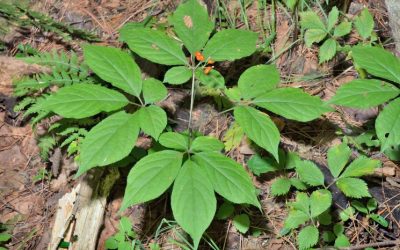
When Does Ginseng Have Berries?
When you think of the ginseng plant, you might think about the full plant in all its green and red beauty with the berries shiny and ready to be planted; but American ginseng doesn’t have berries most of the year. The beautiful red berries are only on the plant for a small window of time.

How Plants Reach for the Sun: Phototropism
One of the earliest questions in botany was how plants knew where the sun was, and how they grew towards the light. With more attention on the plant world, it was found that all plants – not just sunflowers – reached for the sun.
This phenomenon is called phototropism, and in this HerbSpeak article, you will learn why plants experience phototropism, how it works, the effects of different types of light, and much more.

How Do Plants Absorb Water?
Have you ever wondered how a great redwood can bring water from its roots to its leaves? It can seem like a simple process for a small shrub or food crop, but the uptake and transport of water that defies gravity is a feat of natural engineering.

Venus Flytrap Care 101
The Venus Flytrap is a common impulse buy at many grocery stores and plant nurseries, with the plant’s unique carnivorous features enthralling many children and adults alike and inspiring the creative minds of many writers and movie directors in popular culture. Unfortunately, not many people understand how to care for the Venus flytrap, leading to the plant’s early demise and an unfair reputation for being a difficult plant to care for.

Venus Flytrap – Dionaea muscipula (Plant Profile)
The Venus Flytrap is a carnivorous plant that has captured the love of many quirky houseplant owners. Unlike other carnivorous plants, these plants developed a unique snapping-mechanism to trap unsuspecting prey once they have been felt on the inside of the sticky traps with a set of trigger-hairs.
It is no wonder why these plants are becoming more popular as houseplants, even though they are a challenge for many indoor gardeners; Charles Darwin himself fell in love with these plants, calling these plants “one of the most wonderful plants in the world.”

Pothos – Epipremnum aureum (Plant Profile)
Pothos is a well-loved houseplant that is common for indoor foliage and commercial attraction alike. It is favored for its vibrant, interesting foliage and ease of care. Explore pothos’ plant profile today and learn everything you need to know about Epipremnum aureum and all its varieties.

Pothos Plant Care 101
Pothos is a great beginner houseplant that is easy to care for and survives in many different home environments. While it does not flower in the typical home environment, its leafy vegetation is becoming more and more popular with houseplant hobbyists as time goes on and appreciation for the plant grows and new varieties emerge.
In this article, HerbSpeak will cover how to care for your pothos plant, answers to several common indoor gardening questions, and ideas on how to display your pothos with pride!

4 Best Microgreen Trays Compared
In this article, HerbSpeak will cover the pros and cons of several popular microgreens trays to help you decide which one is right for you – and which ones just aren’t worth the money for what you’re looking for.

24 of the Best Gifts for Gardeners Who Have Everything (Indoor and Outdoor)
In this shopping guide, HerbSpeak steps in to spread a little more holiday cheer by helping you choose the right gifts for the lucky recipient. No knowledge of gardening required!

Why Do Leaves Change Color in the Fall?
This process takes place across the globe, but climates that receive a healthy mix of all seasons are the most likely to have “peak fall foliage.” Areas with mild winters are less likely to have colors as vibrant as leaves need less preparation for the cold weather. So, why do leaves change color in the fall for these peak foliage areas of the world?