
Notice
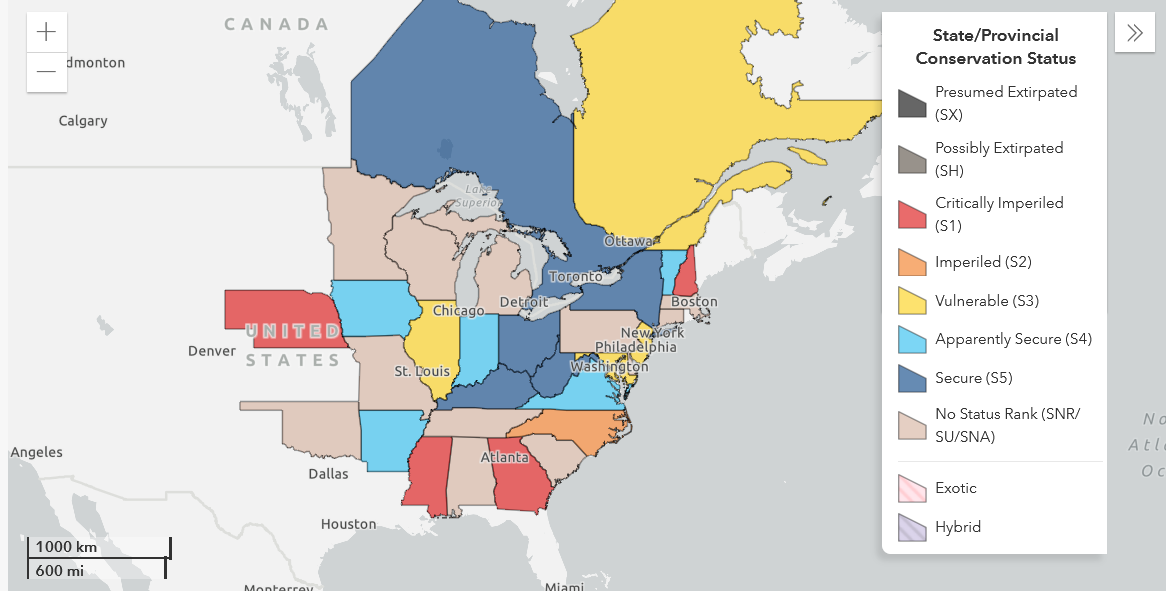
This is a global tool for specific datasets and ecosystem distribution; however: most species data is confined to the United States and Canada.
NatureServe Explorer
NatureServe Explorer provides an array of data visualizations such as maps, conservation statuses, and technical information on over 100,000 species and ecosystems that are imperiled or at-risk. Partnering with both governmental and non-governmental organizations throughout the United States and Canada, NatureServe strives to provide the most authoritative source of information and data for conservation decision-making.
Navigating the Resource
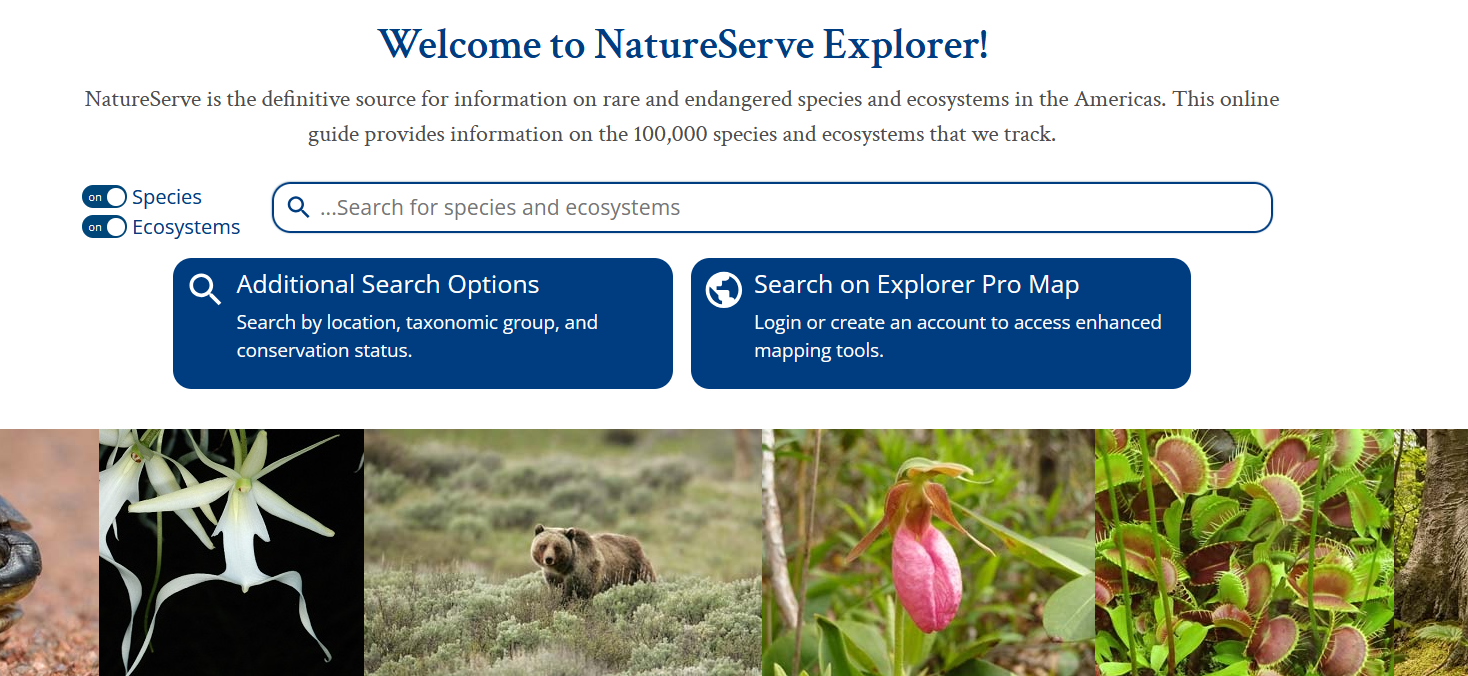
For any page that you land on, you can see its most recently updated date at the bottom right of the page. References are always included, and more contextual information, when available, is always hyperlinked to the relevant words.
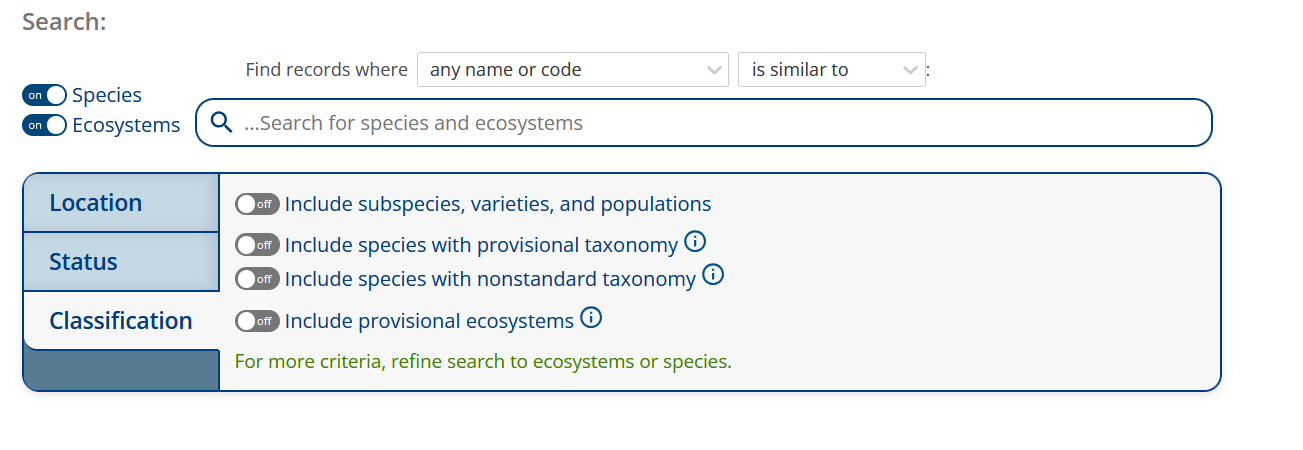
Additional Search Options can help refine your search. To access these options, you must select this option (Additional Search Options) from the homepage before navigating to a species or ecosystem.
Alternatively, if you have made a search but haven’t clicked into a specific species or ecosystem, you will be shown a page with matching species records. A “Refine” button in the top-right corner will allow you to refine your search with these options, as well.
You can select additional search terms, refine by locations within the United States and/or Canada. You can filter by Species and/or Ecosystem, and by specific ranks or classifications. The refine search option also allows you to add Logic to your search.
Species
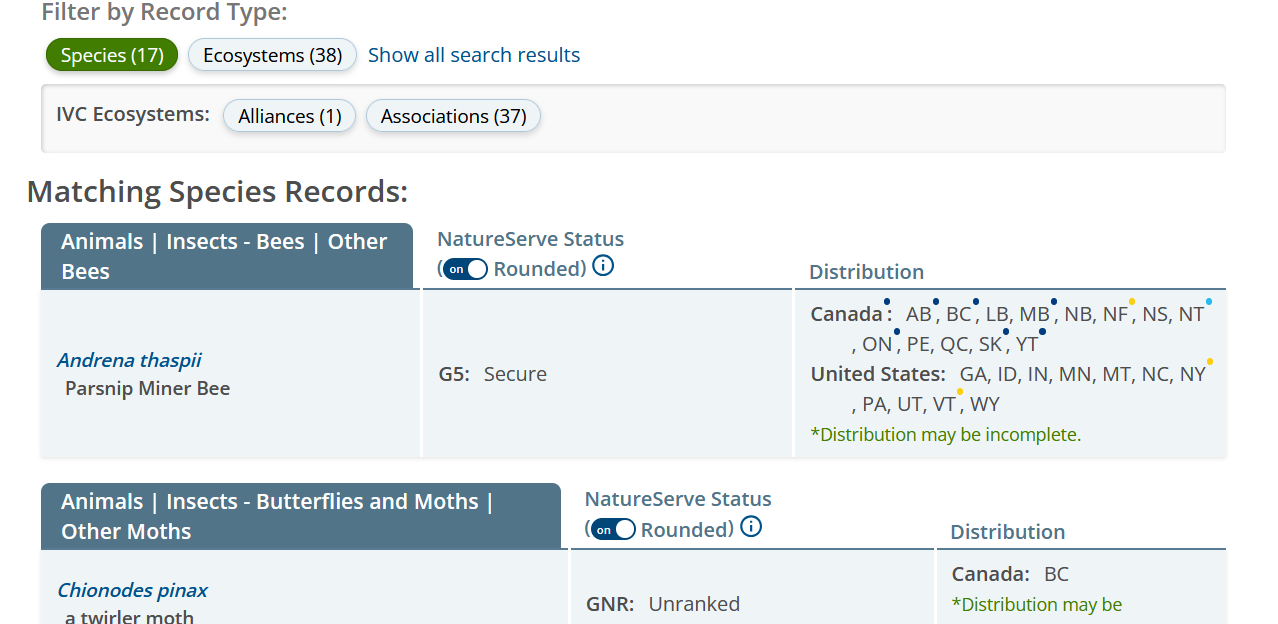
The species search will provide as much information as possible on a partial or similar search, so it is always best to be as specific as possible or else use a refined search. NatureServe offers global distribution information and conservation statuses as color-coded dots next to states where applicable. Records are sectioned into types of species’ classifications, allowing you to–for example–navigate through partial matches that are plants and either dicots or monocots; or, insects that are flies or insects that are bees.
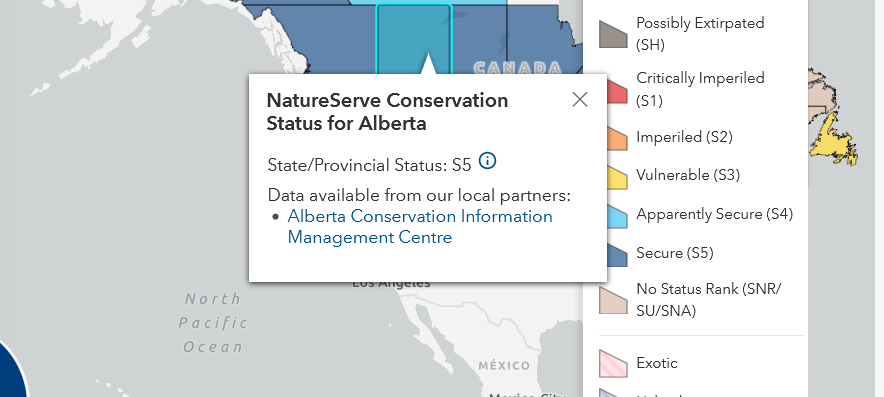
Once you are on the Species page, you will see a generalized ranking by the global range, as well as map of individual provinces and states (typically in the United States and Canada) where the species is documented. A color-legend will appear in this interactive map, allowing you to select individual regions for more information in that region. Scrolling down, you will find a range of information with headings such as: Classification, Conservation Status, Distribution, Ecology and Life History, Population / Occurrence Delineation, Population / Occurrence Viability, and References.
Ecosystems
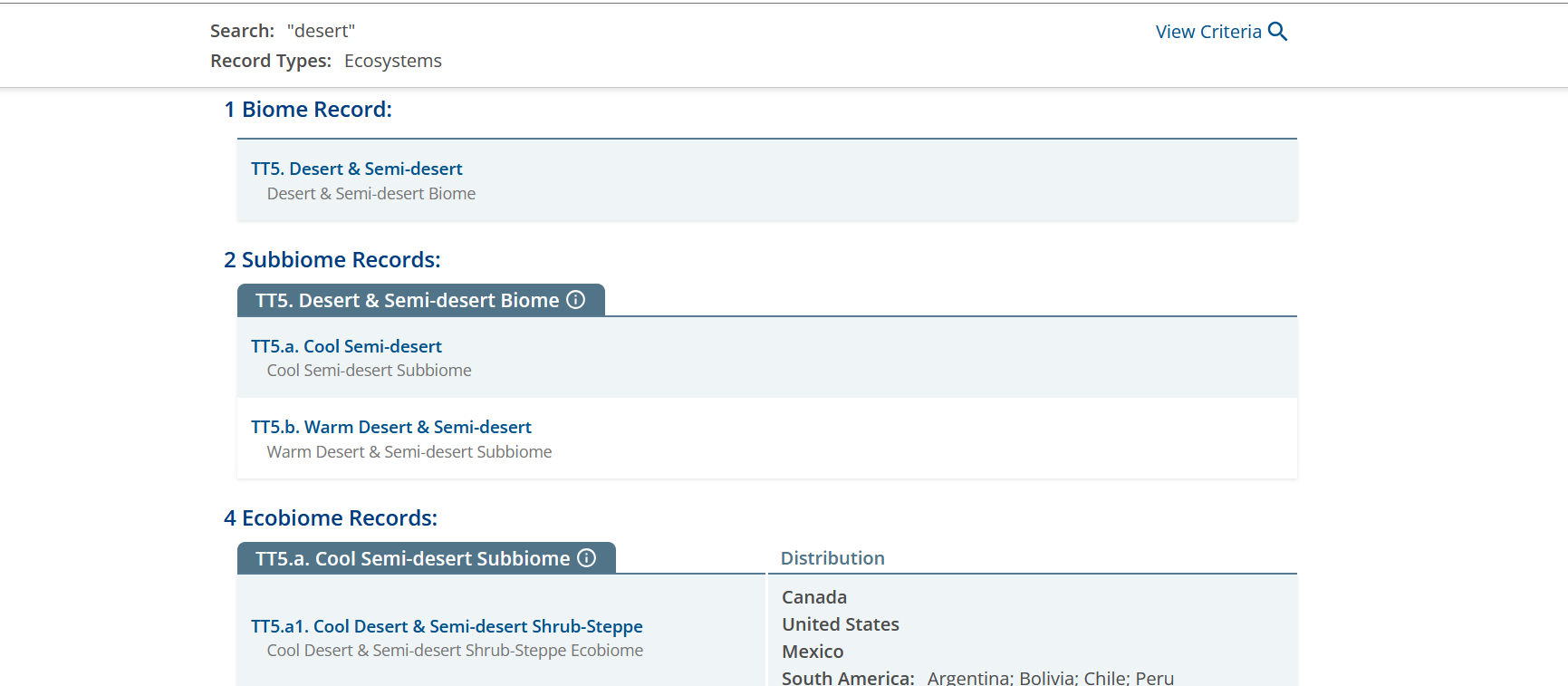
The ecosystem search is full of information, and a refined search is your friend in finding what you are looking for. NatureServe provides global distribution information and nuanced environmental biomes and subbiomes. The search page will provide you with all matches for a specific search, with brief descriptors and distribution information. Distributions may have color-coded conservation statuses based on regional data.
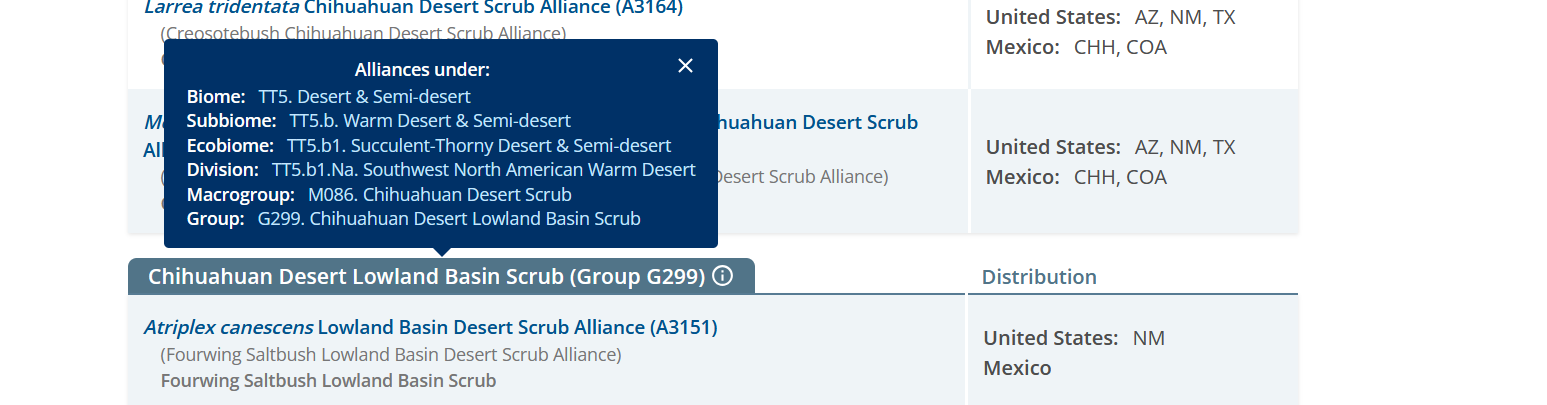
Many parts of the search results have information icons that provide additional information when you hover over them, and additional information is typically hyperlinked to help you explore and research more in-depth.
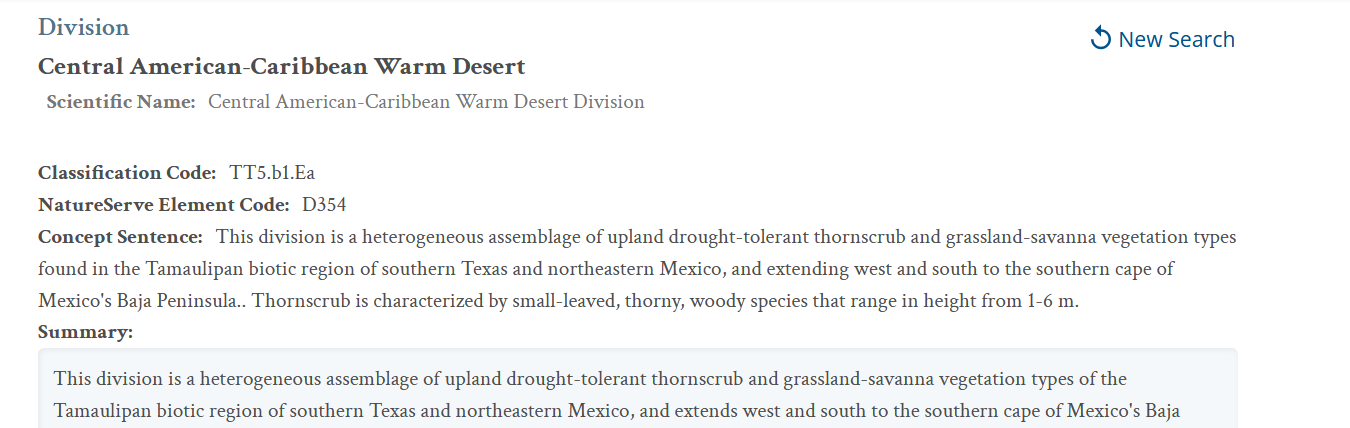
Once you navigate to an ecosystem page, you can see a range of information based on what NatureServe has available. These pages are mostly text and additional linked resources. You will see basic information about the biome, such as its scientific name, classification code, concept, and summary. Different sections include the Type Description, Distribution, Classification, Plot Sampling & Classification Analysis, Related Concepts, and Documentation.
About NatureServe
As a nonprofit organization based in Virginia, US, NatureServe dedicates itself to curating accurate and current scientific information to better assist with protecting biodiversity. NatureServe serves the United States and Canada by collecting ‘decision-quality data’ about imperiled species and ecosystems.
NatureServe’s mission and vision is to leverage the power of science, data, and technology to guide biodiversity conservation and stewardship. The organization was originally established by the Nature Conservancy as a natural heritage network after grassroots efforts began in 1951. As early as 1974, The Nature Conservancy helped establish the first state natural heritage program, and in 2000, NatureServe became its own, independent and separate non-profit organization. In 2024, NatureServe celebrated its 50th anniversary.
The NatureServe Network began in the United States and later expanded into Canada. Their ‘informational products’, however, are global, creating a range of maps and classification systems for several regions throughout the world.
Explorer 2.0 VS. Explorer Pro
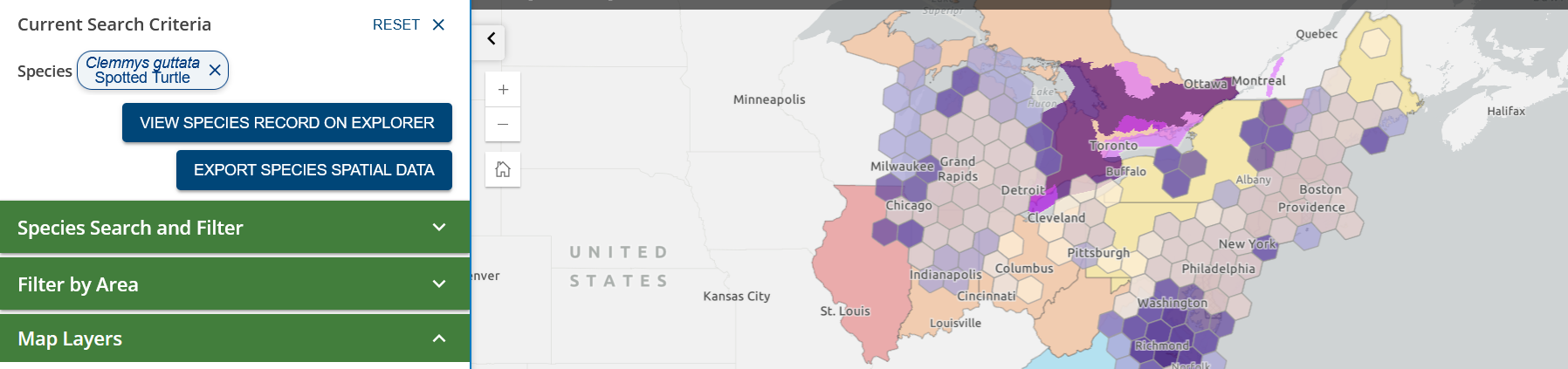
As of the time of this writing, Explorer 2.0 is the primary free-to-access map and data set that is available online. This provides information for over 100,000 species and ecosystems at a state and provincial level, making it more than sufficient for most research purposes.
By making an account, The Pro Map allows you to access more precise data. You gain access to more precise maps and data availability through the single species searches, or area searches for multiple species. You can also create biodiversity reports to aid in decision-making and research. This level of access includes modeled distribution data and forecasting, data downloads, and range maps.
The data is constantly being refined by biologists in the field and lab as natural heritage programs provide location-specific data points back to the central database. Each explorer is updated monthly, providing the latest information that reflects information from field surveys, taxonomic treatments, and other scientific publications. Both maps provide only public-level data. More specific data must be requested with willingness to sign a data agreement. NatureServe and its partners take confidentiality of data seriously, protecting it from misuse. Requests for datasets with with more specific scope and/or level of precision is subject to consideration only on a case-by-case basis.
NatureServe Rankings
It is worth noting that the rankings provided by NatureServe do not always match the heritage program rankings for any given state or province While NatureServe can be utilized as an authoritative source, if state-level accuracy is important, you can often check the status of the specific species or ecosystem with the states’ natural heritage program or similar authority.
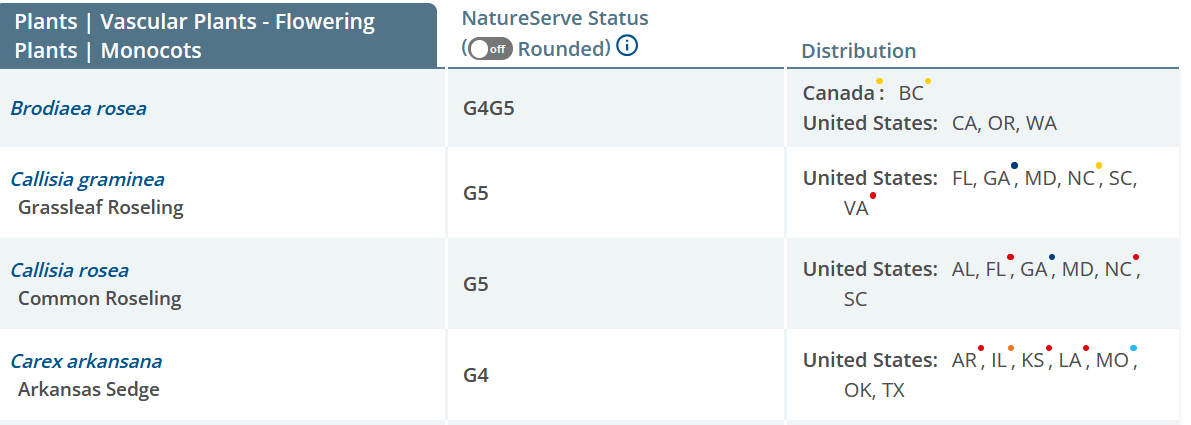
Rounded Ranks are a new feature that is available in the Explorer 2.0. Rounded ranks may be easier to interpret, especially when making broader decisions. Adjacent ranks are typically rounded to the more imperiled rank, while a three-rank range are rounded to the middle.
Rank Ranges is a way that NatureServe communicates uncertainty within the ranking system. Incomplete survey data or a span across adjacent ranks can trigger a ranking range to provide more nuanced rankings.
More information on rankings can be found on the NatureServe Explorer website under About the Data > Statuses > Conservation Status Categories.
0 Comments