
Notice
This is a region-specific tool for North America, including the United States and Canada.
Looking for a global database? Check out KEW.
USDA Plants Database
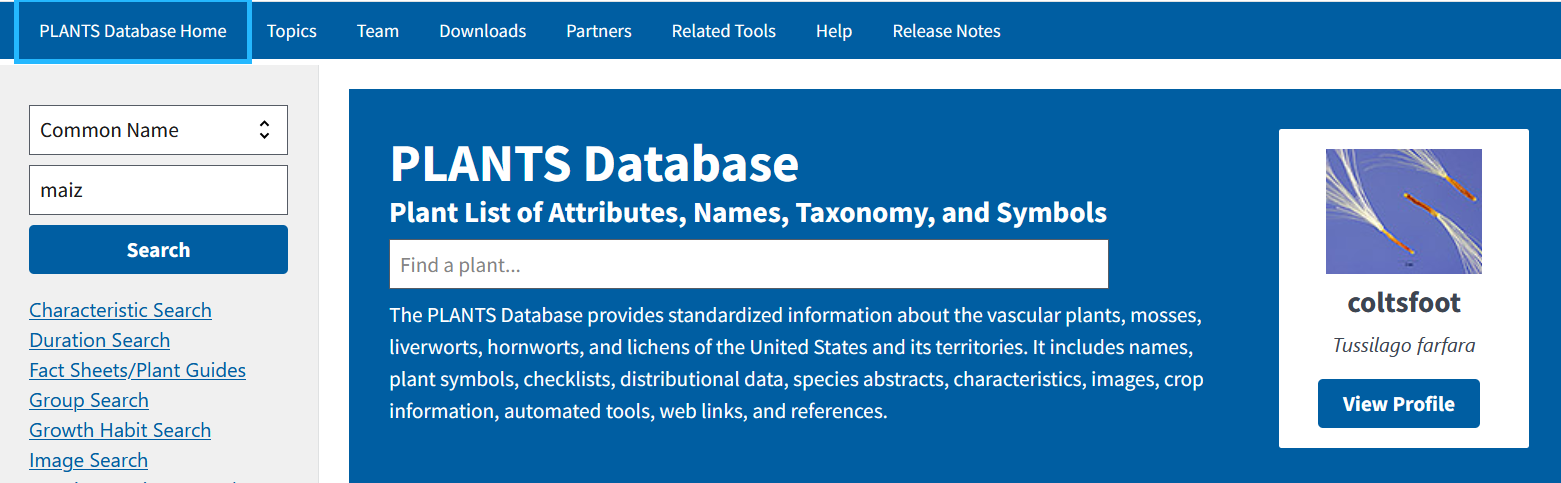
The USDA Plants Database is a tool from the United States government’s Natural Resources Conservation Service through the Department of Agriculture. The Plants Database is intended to provide “standardized information about the vascular plants, mosses, liverworts, hornworts, and lichens of the United States and its territories.” for the sake of land conservation across the U.S., but “academic, educational, and general use” is also encouraged by the USDA.
When you first arrive at the Plants database homepage, you’ll also see other resources listed on the homepage. Most of these resources are offered by the National Resources Conservation Service (NRCS). Other
This database is an excellent resource to reference the names, species abstracts, characteristics and distributional data of specific species. You can also find plant symbols, automated tools, as well as additional web links and references. If you are looking for other types of resources, you can visit the HerbSpeak conservation resources section. Similarly, the National Wetlands Plants List is a very similar type of tool offered by the United States Army Corps of Engineers.
About the Database
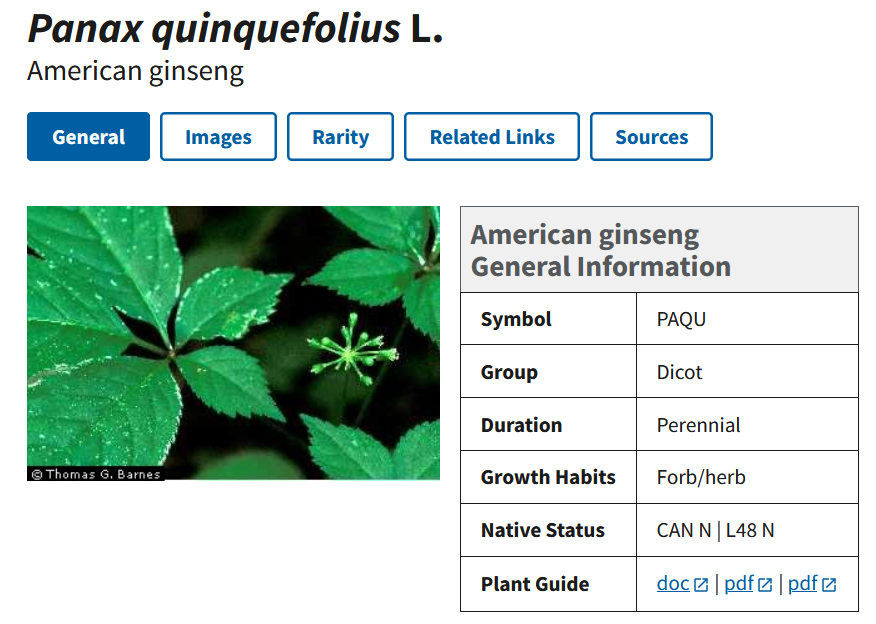
The USDA Plants Database has a range of plant facts to browse, and the homepage periodically updates with a random featured plant profile. Characteristics, images, rarities, duration, state lists, publications and other documentation are listed on each profile. In the Downloads section of the website, you can also access a complete PLANTS Checklist.
Plant Profiles
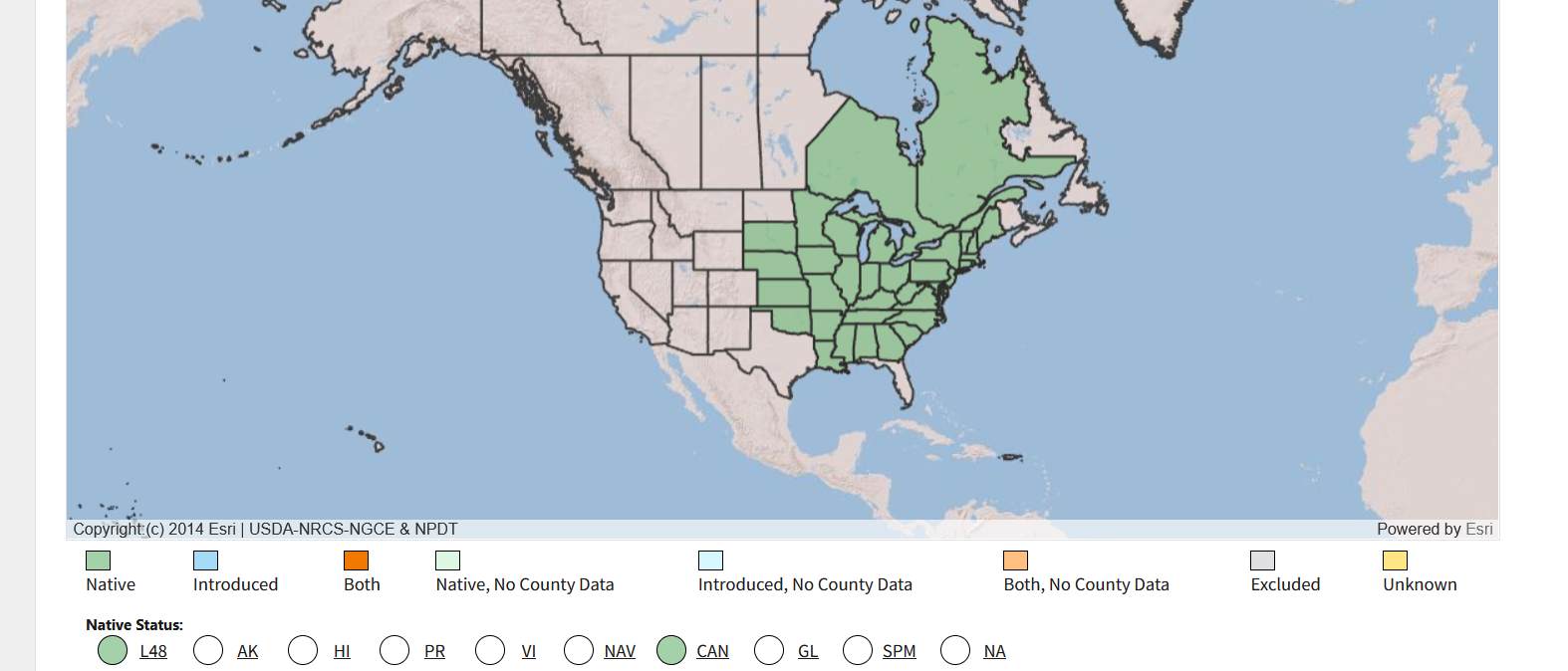
Each Plant Profile has a distribution map with native and introduced statuses. At the time of this writing, most mapping is distributed across the United States and it’s territories, Canada, and Greenland.
The images tab, while sometimes lacking, can sometimes have very detailed photographs of parts of the plant that are typically reserved for scientific purposes, such as a plain-background image of the seeds with a measurement bar. There may also be detailed botanical illustrations. Image credit is provided, and you can click to view the original image.
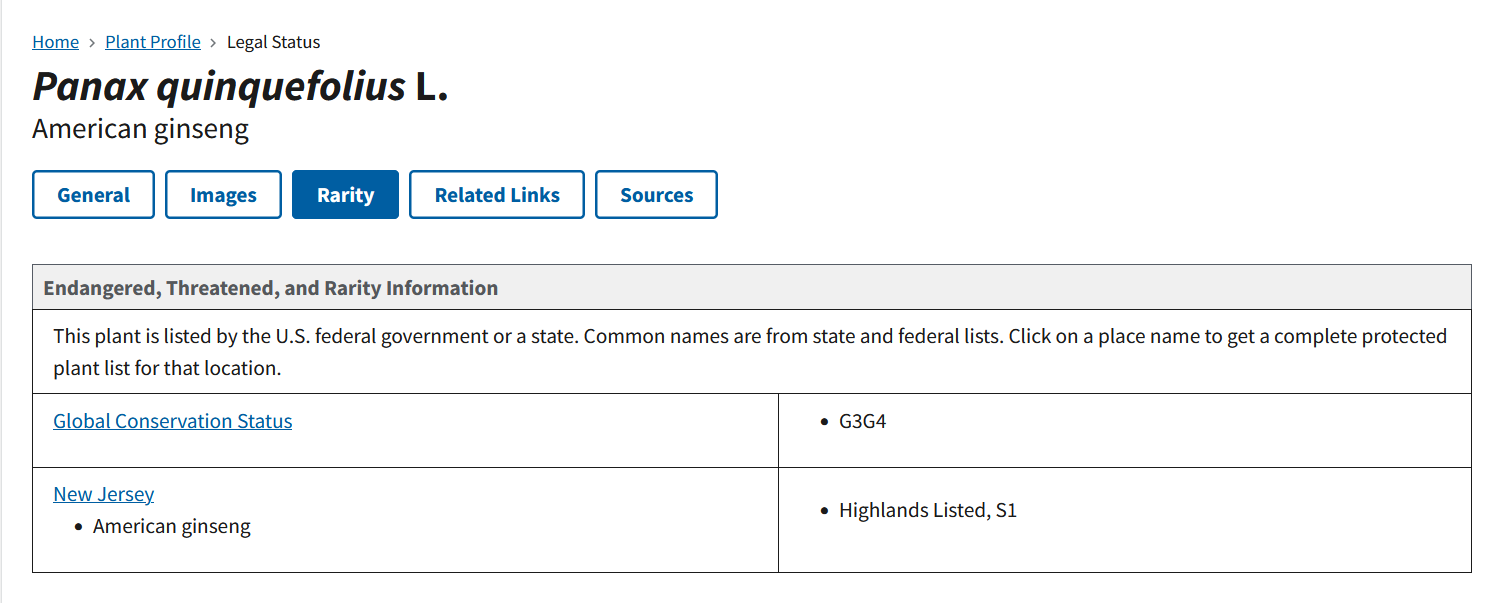
It’s worth noting that the information on this website seems to be largely out-of-date or incomplete. For example, the rarity of Panax quinquefolius L. provides a NatureServe Explorer global ranking, and only New Jersey’s listing, despite the plant being ranked in 35 states and 2 provinces. Both links in this example go to a “404 Not Found” page, rather than to any additional resource.
PLANTS Topics
This section provides a range of search queries that you can make across the database. You will have access to a characteristics search, a list of cover crops used in the PLANTS floristic area, and a distribution update. The Documentation section provides information on the data sources across the website, and the Wetland Status provides wetland indicators by region for over 8,000 plants. There are also other informational resources on this page, such as Endangered, Threatened, and Rare Plants at both the federal and state level. Invasive and Noxious Weeds are detailed at the federal and state level, and Fact Sheets/Plant Guides provide detailed information on select plants’ conservation, establishment, uses, and appearance.
Additional Tools
Because it is provided by the U.S. Department of Agriculture, there are also farming-related tools which you can find by navigating to the USDA Plants Databases’ Related Tools page in the navigational menu. For example, the Crop Nutrients Tool is available, and provides farmers with information regarding the nutrient removal of specific crops at various levels; farms, conservation district, and watershed. At the time of this writing, however, this tool is unavailable and undergoing maintenance.

There is also an Ecosystems Dynamics interpretive tool, which is an “online information system for the development and sharing of ecological site descriptions, ecosystem state and transition models, and land management knowledge.”

The NRCS also provides a Plant Materials Program which develops vegetative solutions for natural resource concerns. This addresses issues such as water quality management, soil stabilization, soil health, and enhancements to critical wildlife habitat. This resource provides technical documents, information about conservation plants, and training resources on the use of plants in conservation planning.
0 Comments